
Introduction
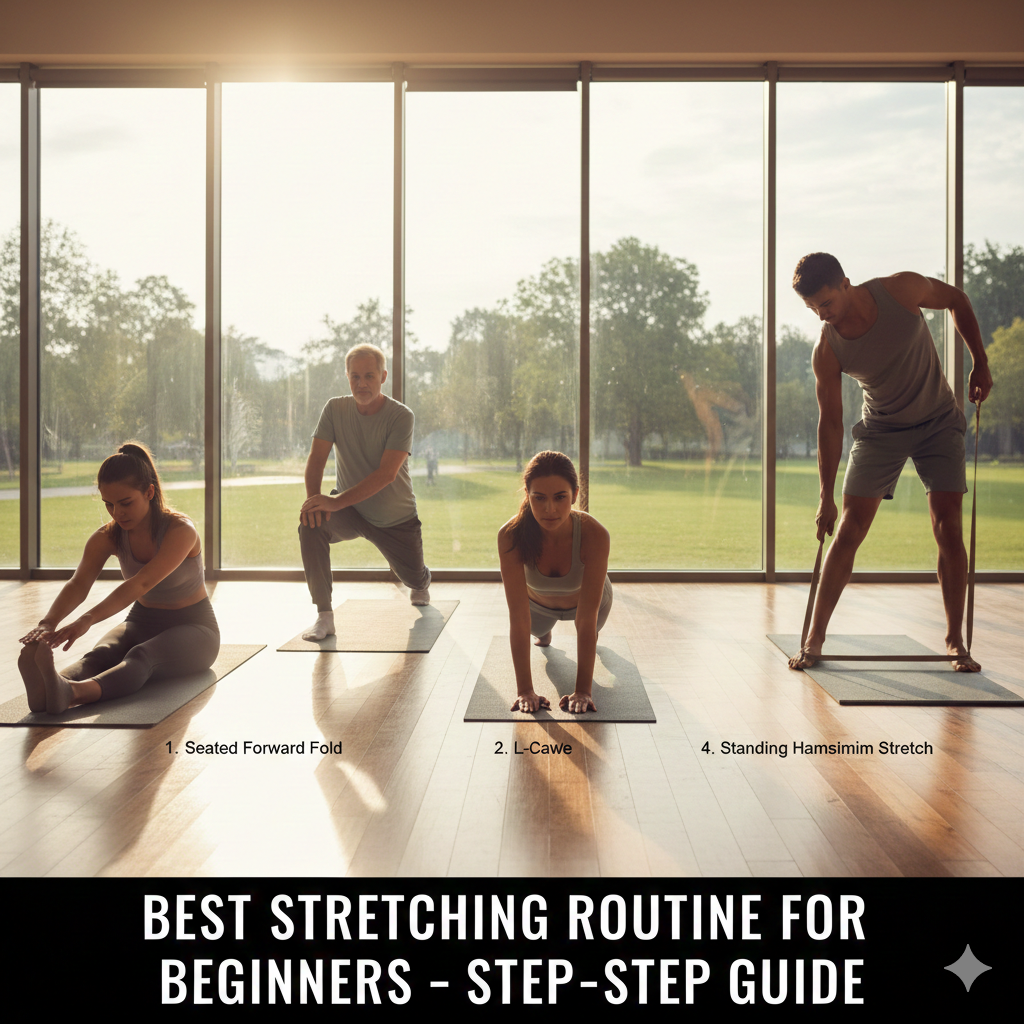
Best Stretching Routine for Beginners – Step-by-Step Guide. Stretching is a fundamental component of recovery, flexibility, and injury prevention, especially for beginners starting a new workout routine. Incorporating a structured stretching routine improves blood flow, reduces muscle tightness, and enhances mobility.
This guide presents the best stretching routine for beginners, covering warm-up and cool-down stretches for all major muscle groups. Step-by-step instructions, benefits, common mistakes, and YouTube demonstrations are included to ensure safe and effective execution. Whether your goal is to complement workouts, improve posture, or prevent soreness, this routine provides a beginner-friendly approach to staying flexible, injury-free, and energized throughout your fitness journey.
Why Stretching Matters for Beginners
Improves flexibility and range of motion
Reduces muscle soreness and stiffness
Enhances circulation and recovery
Supports better posture and balance
Prevents injuries during workouts

Types of Stretching
Dynamic Stretching: Pre-workout, improves mobility
Static Stretching: Post-workout, reduces muscle tightness
PNF Stretching: Advanced technique for flexibility
Top Stretching Routine for Beginners
Warm-Up Stretches (Dynamic)
Arm Circles – 10 reps each direction
Leg Swings – 10 reps per leg
Torso Twists – 10 reps each side
Cool-Down Stretches (Static)
Hamstring Stretch – Hold 20–30 sec per leg
Quad Stretch – Hold 20–30 sec per leg
Chest Stretch – Hold 20 sec
Shoulder Stretch – Hold 20 sec
Calf Stretch – Hold 20 sec per leg

Optional Deep Stretching
Butterfly stretch for hips
Cat-Cow stretch for spine mobility
“https://www.youtube.com/embed/OdI8SgD_QTg”
Tip: Include videos demonstrating proper form and safe stretching techniques for beginners.
How to Stretch Effectively
Perform dynamic stretches before workouts
Use static stretches after workouts to reduce soreness
Hold stretches without bouncing to avoid injury
Breathe deeply and relax muscles
Stretch consistently 3–5 times per week
Common Mistakes Beginners Make
Mistake 1: Bouncing During Static Stretches
Fix: Hold the stretch gently without movement
Mistake 2: Skipping Warm-Up
Fix: Always perform dynamic stretches before activity
Mistake 3: Holding Breath
Fix: Inhale and exhale slowly during stretches
Mistake 4: Overstretching
Fix: Stretch to mild tension, not pain
Real-World Example (Mini Case Study)
Ryan, 24 (Beginner Weightlifter):
Ryan added stretching to his routine:
Improved shoulder and hip mobility
Reduced post-workout stiffness
Enhanced range of motion for lifts
Frequently Asked Questions
Q1: How long should beginners stretch?
10–15 minutes per session is sufficient for a full-body routine.
Q2: Is stretching necessary every day?
Yes, but intensity can vary; gentle daily stretching is beneficial.
Q3: Can stretching prevent injuries?
Yes, it reduces tightness and enhances flexibility, lowering injury risk.
Q4: Should I stretch before or after workouts?
Dynamic stretches before, static stretches after workouts.
Q5: Can stretching improve posture?
Yes, consistent stretching balances muscles and promotes proper alignment.
Internal & External Links
Internal Links
Beginner Yoga for Recovery – 2025 Step-by-Step Guide
Best Sleep Tips for Beginners – 2025 Guide
External Authority References
American Council on Exercise – Stretching guidelines
Harvard Health – Flexibility and stretching
Conclusion
A beginner-friendly stretching routine is essential for flexibility, recovery, and injury prevention. By combining dynamic warm-ups, static cool-downs, and optional deep stretches, beginners can maintain mobility, reduce soreness, and enhance overall fitness performance. Consistency and proper technique are key to long-term benefits.


