Introduction
A strong, well-developed chest isn’t just about aesthetics — it’s crucial for functional strength, posture, and upper body performance. The dumbbell chest workout is one of the most versatile routines for building chest muscles safely, whether you’re training at home or at the gym.
Unlike barbell exercises, dumbbells allow a greater range of motion, improved muscle activation, and reduced shoulder strain. This workout guide will show you a structured, step-by-step plan that targets the upper, middle, and lower chest effectively.
With practical tips, common mistakes to avoid, and YouTube demonstrations, you’ll be able to follow along confidently and see results faster. No complicated equipment needed — just your dumbbells and commitment.
Benefits of Dumbbell Chest Training
Builds balanced chest development
Reduces muscular imbalances
Enhances shoulder stability
Suitable for all fitness levels
Improves pushing strength for daily activities

Why Dumbbells Over Barbells?
Greater range of motion
Controlled unilateral movements
Less risk of shoulder injury
Step-by-Step Dumbbell Chest Workout
Warm-Up (3–5 Minutes)
Arm circles
Push-ups or wall presses
Shoulder mobility drills
Tip: Activate the chest and warm up joints to prevent injuries.
Main Chest Exercises (8–10 Minutes)
- Flat Dumbbell Press
Lie on a bench or floor
Press dumbbells upward
Lower slowly
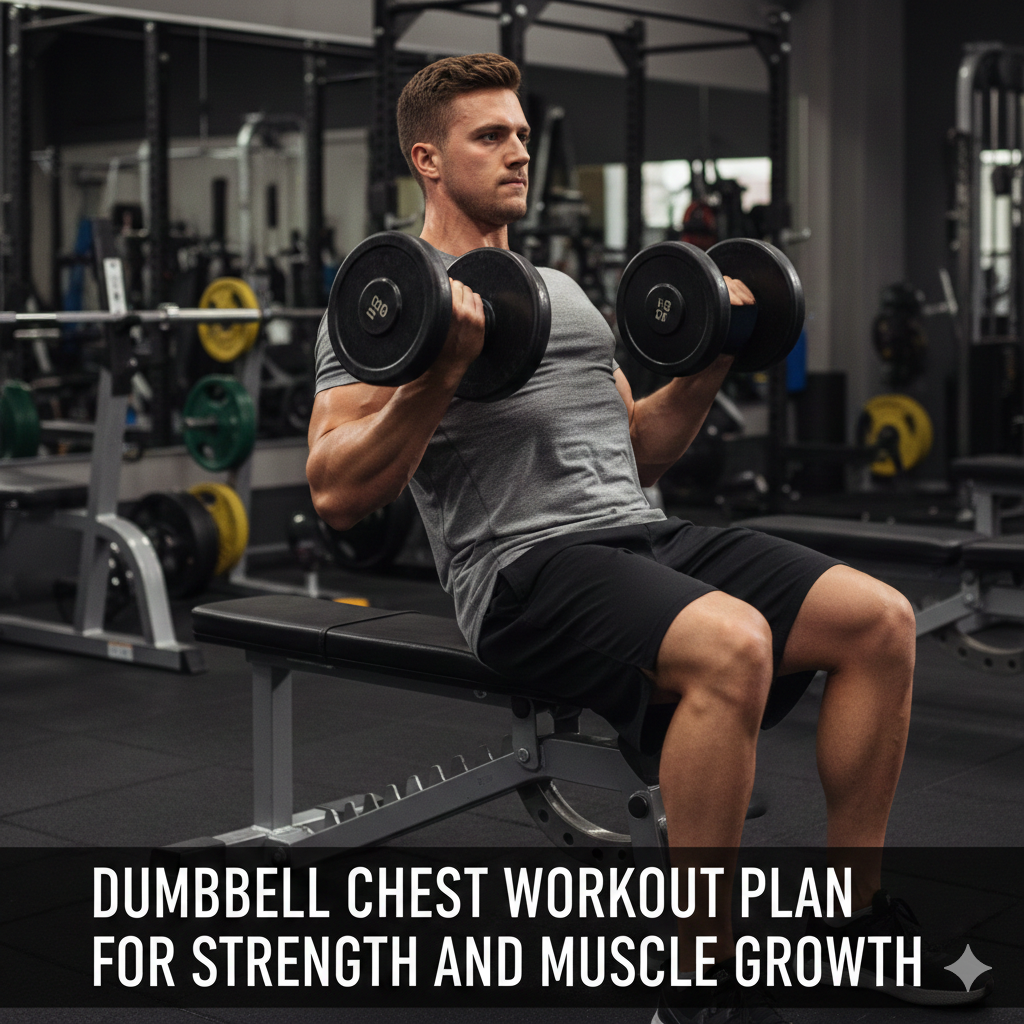
- Incline Dumbbell Press
Bench at 30–45°
Targets upper chest
Controlled motion
- Dumbbell Fly
Slight bend in elbows
Focus on chest stretch
Avoid locking elbows
- Push-Up with Dumbbell Row (Optional)
Combines pressing and rowing
Engages core
Repeat 2–3 sets depending on experience.
Cooldown & Stretch (2–3 Minutes)
Chest doorway stretch
Shoulder stretch
Light arm swings
Suggested Embed:
“https://www.youtube.com/embed/X-5dFzg2KX4″
Tip: Use videos with slow reps, clear form cues, and beginner-friendly instructions.
Why This Matters Now (Trend Relevance)
Dumbbell training is trending because:
Home gyms are becoming more popular
Social media emphasizes functional and aesthetic strength
Users prefer versatile, low-equipment workouts
Building chest strength now is practical, accessible, and aligns with current fitness trends.

Common Mistakes and How to Fix Them
Mistake 1: Elbows Flaring Too Much
Fix: Keep elbows at ~45°
Mistake 2: Using Too Much Weight
Fix: Focus on full range, controlled motion
Mistake 3: Incomplete Stretch or Contraction
Fix: Lower dumbbells fully, pause at peak
Mistake 4: Ignoring Core Stability
Fix: Engage abs during presses and flys
Real-World Example (Mini Case Study)
Jason, 27 (Home Gym Enthusiast):
Jason used only dumbbells for his chest routine due to space constraints. After 6 weeks:
Increased chest size visibly
Improved push strength
Reduced shoulder discomfort
Using proper form and progression mattered more than heavy weight.
Frequently Asked Questions
Q1: Can I build chest with only dumbbells?
Yes, dumbbells allow full chest development if exercises target all regions.
Q2: How heavy should my dumbbells be?
Choose a weight you can lift 10–15 controlled reps with proper form.
Q3: How often should I train chest?
2–3 times per week with rest in between.
Q4: Should I do flat or incline first?
Flat first for overall strength, then incline to target upper chest.
Q5: Are dumbbell flies safe for beginners?
Yes, with light weight and controlled motion.
Q6: Can this workout replace a gym session?
Yes, especially for home-based strength training.
Internal & External Links
Internal Links
Treadmill Workout Plan: Step-by-Step Guide for Fat Loss & Endurance
Pilates Home Workout for Core Strength & Flexibility
External Authority References
ACE Fitness – Chest exercises & safety
Harvard Health – Dumbbell strength training
Conclusion
A dumbbell chest workout is one of the most flexible, effective, and safe ways to build a strong chest. Focus on controlled movements, progressive overload, and proper form to see results at home or in the gym. With consistent effort, your upper body strength and posture will improve, supporting both aesthetic and functional goals.